
Choosing rugs that suit uneven cottage floors

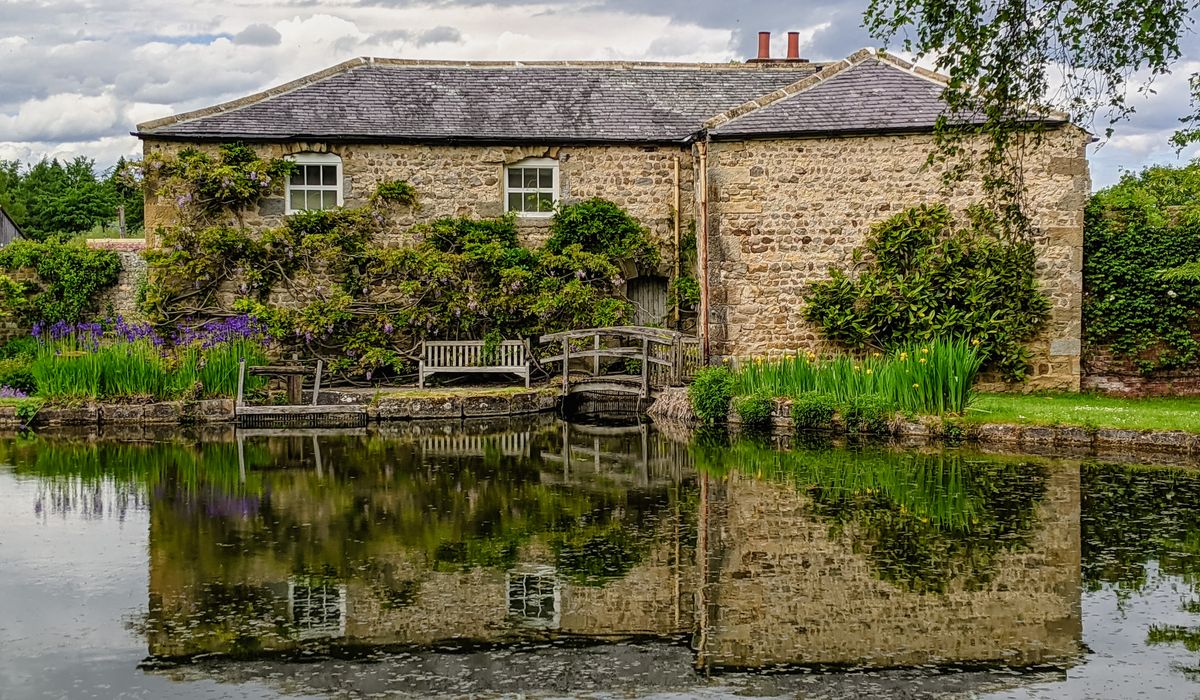
Why cottage floors are rarely flat
Almost every period cottage has a floor that dips, flexes or tilts. Joists cut from green timber have had two or three centuries to move. Flagstones were laid with a fall towards the door so that slops could be swept out. Lime ash, clay and old brick pavers have worn into hollows along the paths people walked most. None of this is a fault — it is a record of how the building has been lived in. It does mean, though, that a rug which looks perfectly flat in a showroom will behave quite differently in your front room.
The practical upshot is that softness and thickness work against you. The deeper the pile, the more a rug ripples over a crown in the boards, creeps down a slope and curls where it meets a wall. Across a floor that drops more than a centimetre or so, a thick shag will look permanently rumpled within a fortnight. What you want is a rug with enough body to soften small irregularities and enough flexibility to lie flat and stay flat.
Flatweave wool is the safest starting point
If your floor is old, uneven and likely to stay that way, a flatweave wool rug is usually the best answer. Kilims, flatwoven dhurries and reversible twill weaves have almost no pile to compress, so they follow the floor rather than fight it. Where boards dip, the rug dips with them. There are no tufts to flatten unevenly under a chair leg, and no thick backing holding a memory of every bump.
Wool also copes well with the humidity swings of an old building, resists dirt and wears gracefully rather than flattening in patches. Weight is your friend here: a substantial wool flatweave is far more likely to stay where you put it than a light, floppy one. Do avoid anything with a stiff latex backing and a deep pile. Those backings hold the shape of the floor beneath them, so the rug lifts at the corners and tents over every high board.
Cotton and washable rugs for hard-working rooms
For kitchens, boot rooms, hallways and anywhere with a dog, cotton is often the better bet. Cotton flatweaves — rag rugs, printed dhurries, woven runners — are thinner still, so they sit tight to uneven quarry tiles and brick, and most can go in the machine at 30°C. That matters more than elegance when the back door opens straight onto the garden.
- Woven, not glued. Glued layers separate in the wash; a woven construction survives it.
- Allow for shrinkage. Cotton can lose a few per cent on a first wash, so buy slightly larger for a doorway.
- Think about pattern. Pale or busy patterns lift a dark floor; darker patterns forgive mud.
- Check the care label. "Machine washable" is worth far more than "spot clean only" if you actually intend to wash it.
Jute, sisal and coir deserve a mention, but with caveats. Jute is cheap and hardwearing, though slippery on polished boards and unhappy in damp. Coir is excellent in a porch but coarse and sheddy. Both behave far better with a grip layer underneath.
Anti-slip underlay is the unglamorous essential
Whatever you choose, underlay will do more for how the rug looks and feels than any amount of shopping around. On a slope, a rug's edges fail first: they lift, catch on a toe and become a trip hazard — a genuine concern in cottages with low doorways, thresholds and steps between rooms.
- Woven mesh or rubberised grip pads suit flatweave and cotton best. Buy slightly smaller than the rug so no pad shows at the edges.
- Felt-and-rubber pads add a little cushioning while still gripping, which is useful over cold stone.
- Felt pads under furniture legs protect boards and stop chairs dragging the rug out of place.
- Double-sided tape is a short-term fix for a curling corner, not a permanent one — old boards dislike adhesive.
Trim a pad to sit two or three centimetres inside the rug's edge to avoid a visible ridge. On very uneven floors a thick pad can bridge a hollow and create a hump of its own, so choose a thinner mesh in those rooms.
Sizing and placing rugs in awkward rooms
Scale is where most people go wrong, and an uneven floor makes it more obvious. A rug that is too small looks adrift, and it will not stay put either, because there is not enough weight to hold it.
- In a sitting room, get the front legs of the sofa and chairs onto the rug and leave the back legs on the boards.
- For a dining table, measure the table plus the chairs pulled out. A rug that ends mid-pull catches and rucks every time someone stands.
- In a hall or on a landing, run one long runner rather than several small mats, which will each shift independently.
- Leave a border of bare floor at the walls, especially where old brick, flagstone or wide elm boards are worth showing.
Finally, give a new rug a few days before deciding it is wrong. Wool relaxes with time, and a corner standing proud on day one often lies flat by the end of the week — particularly with a grip pad underneath and a heavy book on top for the first night.

Joeby Ragpa
This template is so awesome. I didn’t expect so many features inside. E-commerce pages are very useful, you can launch your online store in few seconds. I will rate 5 stars.
ReplyAlexander Samokhin
This template is so awesome. I didn’t expect so many features inside. E-commerce pages are very useful, you can launch your online store in few seconds. I will rate 5 stars.
ReplyChris Root
This template is so awesome. I didn’t expect so many features inside. E-commerce pages are very useful, you can launch your online store in few seconds. I will rate 5 stars.
Reply