
The Math Behind the Magic: Understanding iGaming Odds

You’re staring at a slot machine that has paid out three times in the last ten minutes. Your gut tells you it’s “hot” and due for another hit. Meanwhile, the guy next to you abandons a poker table because he’s convinced the deck is “cold.” We’ve all been there—letting intuition drive our bets. But here’s the uncomfortable truth: the house doesn’t rely on luck, and neither does the sharp player. The engine running underneath every casino floor, sportsbook, and online lobby is cold, hard mathematics.
Understanding the math doesn’t kill the fun. In fact, it’s the only way to spot value. Whether you are spinning slots, grinding micro-stakes poker, or betting on the Premier League, knowing the difference between volatility and expected value is what separates a recreational player from a long-term survivor.
Expected Value: The Only Number That Matters
If you take one concept away from this article, make it Expected Value (EV). In iGaming, EV is the average result you can expect from a bet if you could run it a million times. It’s calculated by multiplying the probability of a win by the amount won, then subtracting the probability of a loss multiplied by the amount lost.
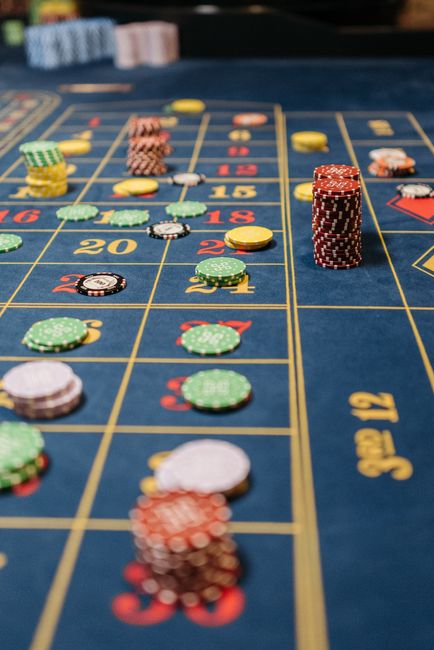
Here is the brutal reality of casino games: every game has a built-in House Edge, which is a negative EV for you. Take American Roulette. There are 38 numbers (1-36, plus 0 and 00). The payout for hitting a single number is 35-to-1. However, the true odds are 37-to-1.
- The Math: If you bet $1 on 38 spins, you risk $38.
- The Reality: You will hit the number once on average ($35 return).
- The Result: You lose $3 over 38 spins, resulting in a House Edge of 5.26% ($3 / $38).
Compare that to European Roulette (single-zero), which has a house edge of 2.70%, or Blackjack (with basic strategy), which sits around 0.50%. The game doesn’t care if you’re “due”; the math is the math. Your job is to find the lowest negative EV or, in the case of poker and sports betting, identify spots where the EV turns positive.
Slots: Volatility vs. RTP
Slot players love to talk about RTP (Return to Player). While a high RTP is great—98% is better than 94%—it tells only half the story. The RTP is a theoretical number calculated over millions of spins. In a single session, volatility matters more. We found สล็อต to be a handy reference here.
High-volatility slots (like Book of Dead or Money Train 3) act like lottery tickets. They offer massive potential payouts but often require a hefty bankroll because you might go 200 spins without a meaningful win. Low-volatility slots pay out frequently, but the amounts are usually small and rarely exceed the initial bet by much.
Here is a concrete tip: If you have a $100 bankroll, do not sit at a high-volatility slot with a $2 spin. The math suggests your bankroll could vanish in five minutes without a bonus trigger. Instead, use a lower stake ($0.20 to $0.50) to survive the dry spells. The RTP stays the same, but the variance becomes manageable.
Poker: The Game of Information
Poker is unique in the iGaming world because you are not playing against the house—you are playing against other players. The house takes a cut (the rake), but your EV is determined by your decisions relative to your opponents. This is where Pot Odds come into play.
Imagine you are on a flush draw on the turn. The pot is $100, and your opponent bets $50. You need to call $50 to win $150 (the pot plus the bet). This gives you pot odds of 3:1. To break even, you need to win the hand 25% of the time.
- Count Your Outs: You have 9 cards that complete your flush.
- Use the Rule of 2 and 4: Multiply your outs by 4 (on the flop) or 2 (on the turn) to estimate your percentage. 9 outs on the turn = roughly 18% equity.
- Evaluate: Your equity (18%) is lower than your pot odds (25%). Therefore, calling is a negative EV play—unless you have implied odds (expecting to win more money on the river if you hit).
Pros don’t guess. They do this arithmetic in split seconds. If the execution is correct, the variance evens out, and the profit follows.
Sports Betting: The Vig and The Market
In sports betting, you aren’t battling a physical machine; you’re battling the closing line. The sportsbook makes its money through the vigorish (vig), often called the juice. Standard pricing is -110 on both sides of a point spread. This means you risk $110 to win $100.
To win 50% of your bets at -110, $220 risked returns $210 ($100 profit + $110 return), a guaranteed win for the house. To be profitable, you must hit above 52.38%. The sharpest bettors seek out “market inefficiencies.”
For example, if you spot a line where the true probability of an outcome is 55% but the odds offered imply a 50% chance, you bet. Over 100 bets, you grind out a profit. Conversely, “square” bettors chase public teams (like the Dallas Cowboys or Manchester United) regardless of the price.
- The Line Move: If a line moves from -3 to -4.5, the money is coming in heavy on that side. You want to bet before the move if you agree with the direction.
- Identify Value: Don’t ask “Who will win?” Ask “Is the payout higher than the actual probability of the event occurring?”
The Psychology of Variance
Even with a perfect mathematical edge, variance is a beast. You can make a great bet and lose. This is called “an honest loss.” The biggest bankroll killer in iGaming isn’t a bad beat; it’s tilt—making emotionally charged, high-EV-destroying bets to chase losses.
Understanding the math allows you to separate the decision from the result. If you go all-in pre-flop with pocket Aces and lose to a 7-2 offsuit, you made the correct play. The math was on your side. Over a lifetime of hands, that play prints money.
Conversely, if you hit a ridiculous long-shot parlay and win, that doesn’t validate the strategy. It was a bad bet that got lucky. Confusing luck with skill is the fastest way to donate your bankroll to the house.
Conclusion: Respect the Numbers
The allure of iGaming is the thrill of the unknown—the anticipation of the next card, the next spin, or the next goal. But underneath that thrill is a structure of mathematics that is totally indifferent to your emotions. You don’t need a Ph.D. in statistics to win, but you do need to respect the numbers.
Stop playing on gut feelings and start seeing the games for what they are: equations with variables. Find the value, minimize the edge, and manage your volatility. The magic isn’t in the machine; it’s in the math that dictates the machine. Master that, and you’ll find the games far more rewarding—whether you win or lose the hand.

Joeby Ragpa
This template is so awesome. I didn’t expect so many features inside. E-commerce pages are very useful, you can launch your online store in few seconds. I will rate 5 stars.
ReplyAlexander Samokhin
This template is so awesome. I didn’t expect so many features inside. E-commerce pages are very useful, you can launch your online store in few seconds. I will rate 5 stars.
ReplyChris Root
This template is so awesome. I didn’t expect so many features inside. E-commerce pages are very useful, you can launch your online store in few seconds. I will rate 5 stars.
Reply